Tuesday, July 24, 2012

A River of Music

Saturday and Sunday, 21-22 July


Royal Victoria Dock with Canary Wharf
and Millennium Dome in the distance
The universe has realigned. Perhaps the gods and goddesses of Olympus have not lost their powers after all. Yes the errant polar jet stream has at last moved back to more northerly latitudes, where it should circulate at this time of the year, and our winter-summer of rain and gloomy darkness is over. At least for this week, we have the best of summer in London: blue skies, warm breeze, and no rain in the forecast.

The Olympics begins with the opening ceremony on Friday. I had lunch with a friend today who may have a ticket to one of the dress rehearsals. Her daughter was a classmate of Danny Boyle's daughter, and they have saved a seat for her daughter. But the problem is her daughter is in the States, and all the flights to London are fully booked. So my friend will use the ticket herself. This is the third story I've heard of people trying to get to London this week, but there are no seats available. I guess it's true that the whole world will be in London by the end of the week.

This weekend a good part of world music was in London playing at the  River of Music Festival sponsored by BT — British Telecom — for the Cultural Olympiad. A particularly good idea to bridge the connection between culture and sport, the event was to have musicians from every country sending athletes to the Olympics playing for London. Even better, they were nearly free concerts, costing only the £3 Ticketmaster fee on each ticket. Five stages along the Thames featured music from Asia, Africa, America, Europe and Oceania. There was also an extra Europe stage in Trafalgar Square, a non-river site.

Early on Saturday we set off for East London, the former port, docks, and industrial sector of the city, that is slowly being rebuilt, rehabbed, revived or gentrified, depending on your point of view. The initial Docklands projects in the 1980s resulted in the Canary Wharf financial centre which is now a thriving node of London. The Olympic Park development is designed to create the same magic in the Stratford area of northeast London. Despite being one of the world's oldest cities, London covers such a large land area, it has been able to use a growth strategy associated with the new cities of the western and southern United States where available land encouraged sprawling development that increased the area and population of cities like San Diego, Houston, Phoenix and Atlanta. London is encouraging dense nodes of development on brown-field sites using transport systems. New light rail lines cut through derelict industrial sites and old rail lines are connected into an Overground system that links with the Underground.

The Africa Stage was located in one of these derelict sites that is now being turned into something called the London Pleasure Garden.  Pleasure Gardens were popular places of entertainment in the 18th century. They were the amusement parks of Georgian London with gardens to promenade through, music and theatre productions, and one of the only places where different classes might intermingle in a seriously class-bound culture. This Pleasure Garden is being put together with a street edge by community artists — with funds from otherwise evil financial institutions.

The Docklands Light Rail station Pontoon Dock is right across the road from the ornate pink entrance to the grounds. Right away you enter a fantastic plaza and promenade along the old dock.

Follies, popular in Georgian England, abound, here with an urban edge: emulating the pyramidal roof of Canary Wharf's first office tower and the space ship form of the Millennium Dome. Both buildings are visible from the Garden.
Surrounding derelict buildings add extra character to the site. The Millennium Mill is a famous landmark.
Silo D was new to us.

This area of the Royal Victoria Dock was the centre of flour milling for grain arriving from around the world. The grain was off-loaded from ships into Silos such as D, and then milled for markets around the country.

The African musicians we heard were fantastic.

Seckou Keita, from Senegal
and the Batamba Syndicate, from all over West Africa

Seckou Keita playing his amazing stringed kora
SAfricanto from South Africa . . .
. . . with Hugh Masekela


A beautiful day with sun and blue sky as the day went on. Sadly we had to leave mid-afternoon — although our old bones had enough of sitting on the pebbled ground — to go off to the Barbican to see the premier of Alfred Hitchcock's first film The Lodger: A Story of the London Fog from 1927 which has just been restored by the British Film Institute — celebrating Hitchcock for the Cultural Olympics — with a new score commissioned from Nitin Sawhney who was conducting the London Symphony Orchestra. Quite fantastic. Susan and I saw The Lodger ten or more years ago when it had been previously recently restored, but the head of the BFI explained before the screening that the technology to clean the film did not exist ten years ago, and I do remember it was very spotty and a lot more foggy too. An added surprise was to discover that our favourite graphic artist E. McKnight Kauffer did the titles for the film.


Sunday we headed to Greenwich on a gloriously sunny day. The Oceania Stage was set in the Grand Square of Christopher Wren's magisterial Royal Naval Hospital originally built for pensioners of the Royal Navy to match the digs Wren designed for old soldiers in Chelsea.

I wonder what Wren and Hawksmoor and Van Brugh
and all the other leading lights of Georgian design would think of this.

George II, the really obscure George among the four Georgian Georges,
seems ready to assist the cameraman.
We listened to the Australian Crooked Fiddle Band and The Black Arm Band Company, an aboriginal soul band who sang songs about their history.
The didgeridoo player and his music were especially wonderful.

Then we headed off to the Tower of London where the Americas Stage was set in the moat outside the Tower Walls. What a great venue for a concert.
The trebuchet adds an extra level of antique security.
Or perhaps it's defending the Tower from the advance of The Shard
London's newest "iconic" landmark.
Across the river, London's bulbous City Hall with a glass
Olympic Torch installation from EDF with animated figures and flames.
Saturday's line-up had been musicians from the States; Sunday was  devoted to the other Americas. We heard Ondatropica from Colombia, the Creole Choir of Cuba, and La Bottine Souriante from Quebec.

We were pretty exhausted by the time arrived back home Sunday evening, but for once it was still sunny and bright as London summer evenings should always be. And we definitely felt culturally enlightened with music from four continents — two Americas, Africa, and Australia — in our heads. Two thumbs up for the Cultural Olympiad.

Friday, July 20, 2012

Time Out for a birthday break . . . in Paris

Saturday, 30 June - Monday, 2 July


Happy Birthday!
Between all the music and theatre in London, we hopped onto the Eurostar with Susan and Cato to celebrate Susan's Golden Birthday, 30 years old on the 30th of June. We stayed at our favourite hotel near the Luxembourg Gardens. After a birthday lunch, they took off to do a little of everything since this was Cato's first Paris visit. Bob and I, encouraged by sunshine and blue skies, set off to see some museums we had never visited before. Bob's choices were the Technology Museum and the Naval Maritime Museum that was having a huge and wonderful exhibit about lighthouses.
Saturday: Museum of Arts and Measures: Science and Technology
a geek paradise
Bartholdi's model of the Statue of Liberty, in the museum's courtyard
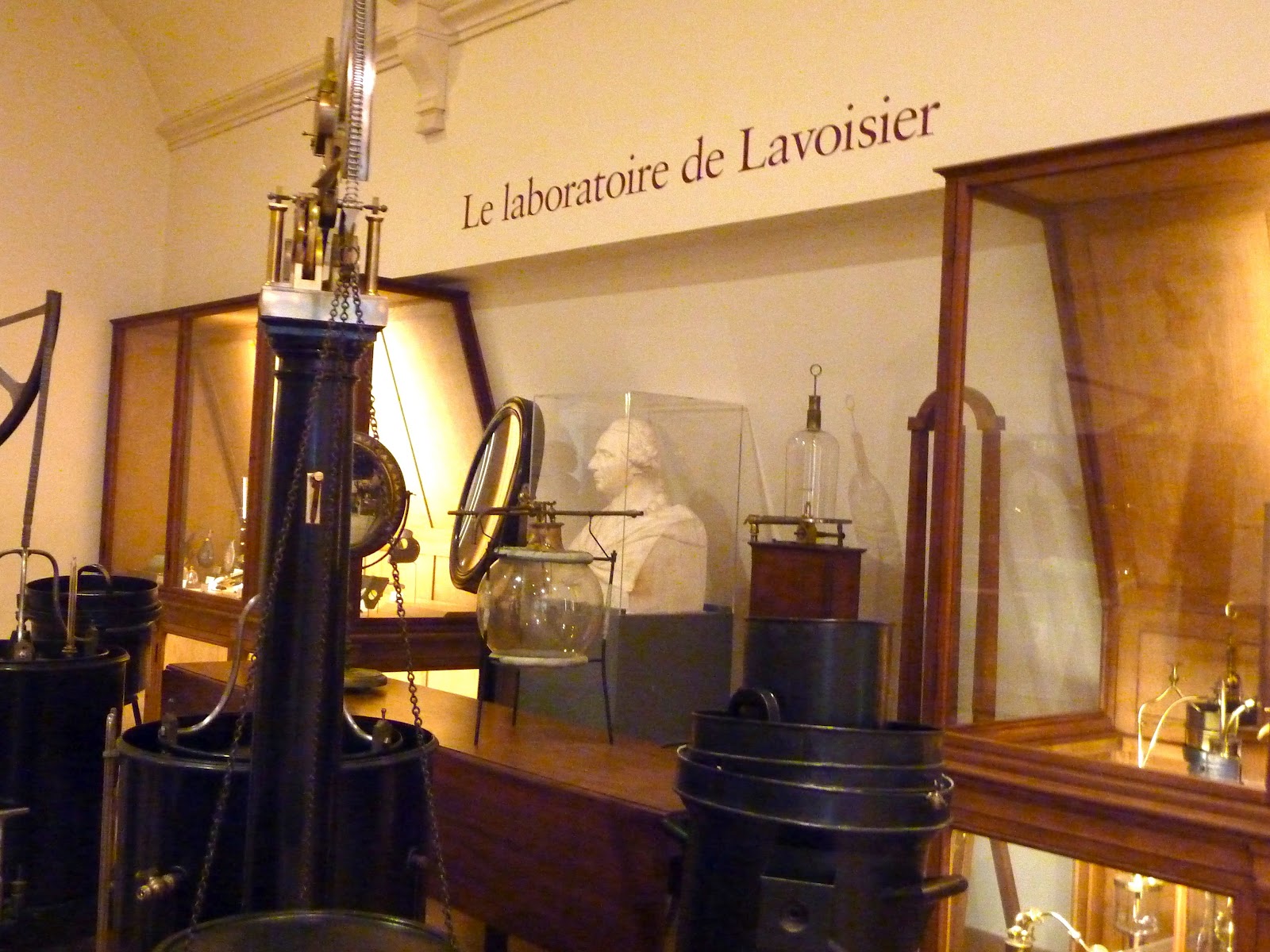
Lavoisier's laboratory equipment which he used to make water
from tanks of oxygen and hydrogen
Foucault's Pendulum
Blériot's plane used to make the first Channel crossing in 1909
Bleriot's plane really does look like a bicycle with wings

Sunday: The Trocadero to visit the Maritime Museum

Built for the 1937 International Exposition 
With Art Deco sculptural adornment
And beautiful metalwork gates
The Maritime Museum has Napoleon's Royal Row Boat
And a balloon basket right out of Jules Verne's
 Around the World in 80 Days
Across the street from the Trocadero is the Passy Cemetery
With a list of famous tombs, but all very hard to find in the
packed graveyard 
Manet: a favourite artist
Berthe Morisot, who was married to Manet's brother
Heading back to the hotel after a long day by way of the Eiffel Tower

Thursday, July 19, 2012

The summer of culture continues . . . with theatre

Sunday, 8 July


Nothing says London like theatre. In truth that statement should be expanded to the whole of the British Isles, which includes the Republic of Ireland's prodigious contributions. Theatre is deeply embedded in the national character. Elite Ivy League students in the States want to start-up the next Facebook or join the street gang of looters in private equity. Here every Ox-bridge student has a burning ambition to be on the stage. (If that doesn't happen, they will join the Ivy Leaguers on the alternate route of course.)

Maybe it's just having Shakespeare as a native son, but I suspect Shakespeare is the result of the national passion rather than the cause, as the roots of English theatre are very long. More than a few years ago, Bob and I went to York to see the Medieval Mystery Plays the city is working to revive as a regular festival. The plays date to the 14th century when city guilds and confraternities took on a particular Biblical story and using wagons paraded through the city performing the tale at various stops for Corpus Christie. Many other cities had traditional Mystery Play cycles to celebrate various Holy Days. The Reformation put a stop to these Popish spectacles, but York's plays have been revived off and on over the past hundred years. When we saw them, community groups took on the role of the medieval guilds to produce a specific tale. Carts were used to travel to staging areas around the city where the cart would be turned into a set — often a magnificently elaborate set — with a few flips of lids and side panels, and the play would be performed before moving on to the next staging area. This year the pageant is returning to a mid-20th century model with an outdoor theatre set up in a central park on the site of the ruins of York's medieval abbey with an afternoon and an evening showtime lasting throughout August. York is so crowded with tourists in the summer, it will probably be a sell out.

All of this is to admit that we have become very lax in our theatre attendance so far this year. I can't even say what "must sees" we have missed because I haven't even been paying attention. This summer's cultural barrage has given us a chance to make up for our insufficient interest. One of the problems with theatre is that the niche theatres sell out production runs to their dues-paying members and friends before the general public even hears about the season schedule. A second problem is that the "must-see" pre-opening projection occasionally winds up as the "why would you want to waste time on that" post-opening review.  Not a good feeling with the steady rise in the price of tickets over the past few years.

Crow was a collaboration
between illustrator Leonard Baskin
and poet Ted Hughes.
Our first theatre foray does come under this particular cloud. The Greenwich and Docklands International Festival production of a dance and reading performance of Ted Hughes's Crow with the South African Handspring Puppet Company who did the puppetry for War Horse was pegged as a winner. Sadly the initial buzz from the personal theatre bloggers, who are sometimes more accurate than the professionals, all hated it. The professionals said it was a worthy effort, blah, blah, not completely successful, blah, blah taking on too much, blah, blah, blah. We were indebted to the bloggers who said: the theatre is terrible. Yes, that was true. The Greenwich Borough Hall Municipal Auditorium, much like a high school auditorium with a much too small stage area. And they said: who thought a black background behind black puppets (they are crows after all) was a good idea if you want to see anything beyond the third row. So we sat in the front row.

Ted Hughes
Bob and I did not hate it at all. We actually thought it was quite interesting. The dancers/actors were excellent. The puppets were fantastic. Some were figures manipulated by sticks; some were large winged costumes worn by the dancers. The performance lasted about an hour, reduced by a quarter after the first negative previews, which was just about right for sitting through something where my senses were stimulated while my brain had mostly no idea what was going on. The musical score was eerie and wonderful by Leafcutter John, who is apparently well known and well regarded in the electronic music sphere. Spending an evening outside the cultural comfort zone is always illuminating in some way. I still haven't found a way to appreciate modern dance, but I find I am much more intrigued by modern music. And I still wish I could read poetry without my brain clicking off after the second line to wonder what that could possibly mean, and maybe I should check my e-mail now.

Mary Wollstonecraft Shelley
Next we were off to see a production by one of our very favourite theatre companies, Shared Experience, who do plays adapted from the lives and works of writers. One of the gold star most remarkable theatre experiences of a life time was Shared Experience's After Mrs Rochester, a play that conflates the troubled life of Jean Rhys  with the story of Jane Eyre. Rhys wrote the novel The Wide Sargasso Sea, a pre-quel to Jane Eyre with a plot explaining how Mrs Rochester traveled from her birthplace in the West Indies and ended up in the attic somewhere in the Yorkshire moors. Throughout the play, a mad woman lies writhing and moaning on the floor of the stage.

Percy Bysshe Shelley
Nothing could be as good as After Mrs Rochester, but this year's Mary Shelley was excellent. Teenaged Mary, daughter of radical philosopher William Godwin and feminist Mary Wollstonecraft, who died at Mary's birth, runs off with dreamy, and married, poet Percy Bysshe Shelley to live in penury until his title and inheritance come through, and of course to write Frankenstein. The suicide of Mary's elder half-sister Fanny, the issue of Mary Wollstonecraft's dalliance with Gilbert Imlay, an American land speculator who did her wrong. And the dalliance of Mary's younger step-sister Claire (née Jane) Clairmont with Lord Byron who did her wrong are subplots. An interesting family. They are a physical theatre company with a limited cast and short scenes that move very rapidly, so it is easy to get caught up in the constant action on stage. Among the audience was quite a large class of teenage students. When Shelley steals a kiss with Claire Clairmont the entire class of teenaged girls drew in their breath and gasped at once. It was pretty funny.

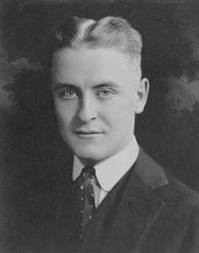
F. Scott Fitzgerald
Finally for a third literary theatre experience, and one that will be added to the gold star list which includes After Mrs Rochester, was the eight hour production of Gatz. The one where The Great Gatsby is read in its entirety over six hours. The extra 2 hours are the intervals and dinner break. As the book is read, by a modern day office clerk trying to get his computer to boot up, the office workers begin to act out the events of the novel using the book's dialogue as their script. The idea suggests the making of a disaster, but not to worry, the performance was riveting, even in an old London theatre without comfortable seats or leg room. A New York theatre company called Elevator Repair Service came up with the idea in 1999 according to the programme notes, but there were copyright issues with the Fitzgerald estate. A few years later, ELS was given rights, and since 2004/2005 Gatz has been playing, first in Europe (but not London), then in the States, in New York in 2010, and now brought to London as part of the London International Festival of Theatre.

Gatsby's Long Island:
North Shore of Nassau County and Queens
I have always had a special place in my heart for The Great Gatsby. When I first read the book, I was in high school on Long Island not far in miles (but very far in family income) from the Eggs, East and West, and not at all far from the Valley of the Ashes which was the site of the 1964 World's Fair when I was reading Gatsby. These were real places. As a teenager I thought Long Island was the worst place in the world, yet here was this famous book, a book everyone was supposed to know and read, and it took place on Long Island. Most great works of literature are read by people much too young and inexperienced to make any sense of what the story is really all about. Perhaps the worst sin is that they are read by people who may not know what is going on but they do know great literature must always be taken seriously.  I have read Gatsby three times, and quite possibly I never laughed once through those readings, but by the first interval of Gatz, that would be 2:05 hours of reading, I discovered The Great Gatsby is a comic novel because I had just laughed my way through the play with the rest of the audience. Yes of course ultimately, we have a tragic tale of obsession and treachery and loss, but getting there is a comedy of manners, the Yalies and the Southern Belles and the hangers-on enabling each others worst qualities. As the reviewers and the programme notes remind us, the similarities between Fitzgerald's 1920s Jazz Age and the pre-financial crisis Noughties are starkly apparent. Our reader/narrator Nick Carraway has come to New York from the boring Midwest to make his fortune as a  bond salesman. That line got a good laugh as you would expect.

Sunday, July 15, 2012

The summer of culture begins . . . with music

Tuesday, 26 June


The Cultural Olympiad began last Thursday. We didn't leap out at the starting gate, but we edged in the next day with a concert from the programme offered by this year's Spitalfields Festival. The Spitalfields Festival was founded decades ago to save Nicholas Hawksmoor's Christ Church, Spitalfields when it was derelict and in real danger of being demolished despite its beauty and historic importance. Christ Church is now in the pristine condition of when it was built nearly 300 years ago.


A few years ago, when Christ Church was closed for building works, the Festival began to hold concerts at the nearby St Leonard's Church, Shoreditch. The current church is only a few year's younger than Spitalfields, designed by another important Georgian architect George Dance the Elder (architecture seems to be a popular family business in England), but there has been a church on the site since Saxon times. According to Wikipedia's entry, Shoreditch was an important centre of Elizabethan theatre, where the first two playhouses were built in 1576 and 1577, so the church has burials and memorials to many famous 16th century pioneers of London's theatre including the Burbages, James who built the first theatre, and employed Shakespeare as a playwright, and his son Richard who starred in many of Shakespeare's plays.

Shakespeare plays a big role in the Cultural Olympiad. Over the summer 37 international Shakespeare companies will be performing all the plays at the reproduction Globe Theatre. So you can hear Shakespeare in Korean (Midsummer Night's Dream), Georgian (As You Like It), Japanese (Cymbeline), Turkish (Antony and Cleopatra), and many other languages. The BBC has produced four of the history plays for TV transmission. Simon Schama is explaining their importance in a TV series. I tried watching one, but I find Schama so patronising and smug, I'm always at a loss as to why he seems to be everywhere these days. There will also be a big exhibition on Shakespeare at the British Museum.  I have been enjoying the podcast of a BBC Radio Four series done by Neil MacGregor, Director of the British Museum, on Shakespeare and his times using artifacts from the Museum. Note to self: stomach Schama and listen to MacGregor's remaining podcast episodes to learn important things about Shakespeare, his time, and his plays.

Back to Shoreditch Church, Friday night, Spitalfields Festival, and a terrific concert by Florilegium, a period instrument group, and a chorus of Bolivian young adults. At about the same time Hawksmoor began working as Christopher Wren's clerk in the 1670s, the Jesuits arrived in Bolivia to convert the native population to Christianity. They established ten missions with the idea of using music to attract converts. They brought along copies of music written in Venice by Corelli, Vivaldi, and Locatelli among others to serve as templates for local musicians to compose suitable work for the missions. The Jesuits were expelled a hundred years later, but the extensive music archives have survived and grown over the centuries. Florilegium's director began exploring Bolivian Baroque ten years ago, founded the choir, and has toured with them for several years. The concert was a mix of Bolivian composers and music brought from Venice in the Bolivian archives.

Now that Spitalfields church is sorted, I hope the Festival will be donating some funding for repair and repainting at Shoreditch too. The venue deserves better than the peeling paint pilasters flanking the altar.

A few nights later we moved on to the City of London Festival for a concert at the other end of the music continuum, Berlioz's Requiem with the London Symphony Orchestra conducted by Sir Colin Davis with a chorus of thousands, well maybe just hundreds, but no one fell asleep during the 90 minutes of  the programme. To top it off we were in St Paul's Cathedral seated under the dome where the famous Whispering Gallery Effect must have been batting the sound back and forth and around like the players at Wimbledon. Then when the horns began blaring from the upper galleries in the transepts the quadraphonic sound circa 1837 is complete. Bob said, if you are going to listen to bombast, it may as well be great bombast. Sitting in St Paul's was a plus too. I haven't been in a very long time, and having an hour and a half to look at the grisaille paintings and lovely mosaics that decorate the dome was a treat.
The grisaille paintings were done by Sir James Thornhill, the most famous painter of interiors for Christopher Wren's projects. The mosaics were not done until the late 19th century however.

This is the painting I was facing, and even after 90 minutes I had no clue to what story it was relating.

Fortunately the website I borrowed this image from has an explanation (and much more). St Paul was shipwrecked off Malta, and when a serpent crawled out of the wreckage, he grabbed it, and did not die, so the locals recognised him as a god (Acts 27).

According to the programme notes, the Requiem was commissioned by the French government in 1837 to commemorate King Louis-Philippe's escape from an assassination attempt on the anniversary of the July Revolution. I boldfaced "escape" because like me you may think a Requiem would be more appropriate for a king who had not escaped an assassination. Go figure. Viva La France and all. As for Louis-Philippe or the July Revolution, I haven't a clue. I have more than enough trouble keeping English
monarchs and uprisings straight to even make a stab at French history.

Wednesday, June 27, 2012

One Amazing Summer

When I left off it was winter, now it is summer, and much has happened in between. And all good things.  Two weddings. One wedding in California where Bob was Best Man. The trip to California, my spiritual home where I met my husband, where my daughters were born, let us connect with so many old friends, many of whom we haven't seen in much too long. (Note to computer start-up son-in-law: Get a job in Silicon Valley, so we can combine trips to see the grandchildren we miss with visits to friends we miss.)

The second wedding was here in London, and Bob and I were Father and Mother of the Bride. So the daughters are sorted then, and well sorted too.

The Queen's Jubilee soon followed, and that was possibly not quite up to the delights of our weddings. There was the soaking rain at the River Pageant. Then our attendance at the local Jubilee Beacon celebration that turned out to be the one Beacon which did not light in the 4000 Beacons that were to unite the country. Shame on you Corporation of London for utilising a complicated electronic switch and not having a back-up plan in place. Poor Isabella chosen to light the Beacon will be in therapy for life. Lighting shouldn't have been more complicated than setting a match to a gas stove burner.

There is of course the very unhappy story of our weather. The wettest, coldest Spring ever recorded according to the weather mavens. The irony being that a mostly dry winter left reservoirs low and water tables uncharged, so the water companies declared a water emergency at the end of March, including a hose pipe ban for garden watering and car washing. On April 1, the skies opened up, and pretty much haven't stopped dripping and dropping water on us since. The water companies have recently reversed the drought emergency allowing people to use their hoses, but really who needs to water a garden totally saturated? Here in London, I am among the many bitching about grey skies, lack of sun, and whether we really do need to put the central heating up a notch even though the calendar says it is June. But the people really suffering are those in areas of the country, north, west, east and south, where floods and gales have caused serious damage.

Now as July approaches, we move into what could, should be One Amazing Summer. The summer is always fun in Hampstead. The locals leave for their second homes in France or Tuscany; the ex-pats head off to their home countries for a season of family and the familiar. Meanwhile the festival season in London bursts with activity for those who stay behind. A vestige of what was once The Season, beginning with the Chelsea Flower Show in May and ending with the races at Goodwood at the end of July. By then the midges in Scotland had completed their short life cycles, allowing everyone who mattered to pile into Scotland to prepare for The Glorious Twelfth when the shooting can begin.

This year we have the Olympics beginning in exactly a month from today. Going along with that the usual London summer festivals of Spitalfields, and the City of London, and the Greenwich and Docklands, and the Proms at the Albert Hall, there is the Cultural Olympiad.
No one is quite sure what that is exactly, but they have issued a 138 page official guide to the London 2012 Festival chock full of events sponsored and scheduled to be held all around the nation not just in London from 21 June to the 9 September. This may make our exhausting 2010 Staycation look like a mere walk in the park.

Let me just add that a country like the UK which has some of the best graphic design in the world has chosen some of the worst graphic design I have ever seen for this Olympics. The logo is repellent. Do I need mention Lisa Simpson? The cover of the Festival brochure is one of the official posters, each one worse than the next. And the mascots have blessedly disappeared since they were unveiled to universal dislike.  I see they have added a lion with an actual face to the mascot line up. Didn't anyone read up on cognitive research that explains people respond to babies and soft toys because they have cute faces with big eyes that trip a biologic response that says nurture me, or in the case of stuffed toys, buy me.